


The National Association of Local Authorities of Georgia (NALAG) continues close cooperation with Gender Equality Councils in self-governing units and, through the media network created within the project “Localization of Gender Policy,” gradually publishes interviews that cover measures implemented to ensure gender equality in municipalities and activities planned by self-governing units in this direction.
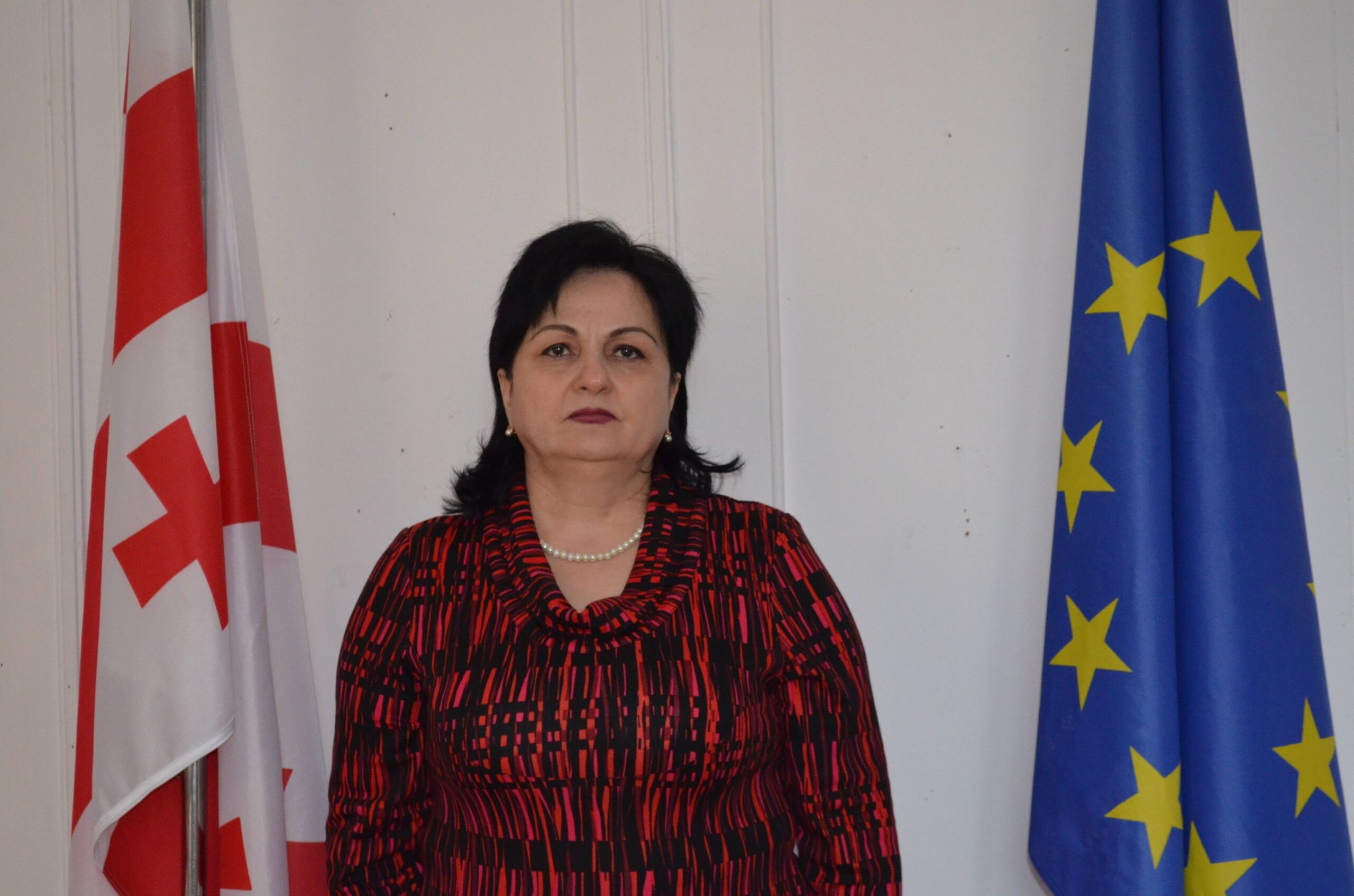
To share good examples and practices, NALAG’s media network now offers an interview with Tamar Keinishvili, Chairperson of the Akhmeta Municipality Council and Gender Equality Council.
Ms. Tamar, Akhmeta Municipality is distinguished by its ethnic diversity. Consequently, the needs and priorities are different. What challenges does your municipality face?
In Georgia, increasing attention is being paid to working on gender equality issues at both central and local levels. Akhmeta Municipality is no exception in this regard. As you mentioned, it is characterized by ethnic diversity, sensitivity to customs and traditional values, numerous challenges related to gender equality, and the presence of vulnerable groups. That is why all these issues are a top priority for Akhmeta Municipality.
I believe that to ensure gender equality, it is necessary to strengthen sustainable institutional, legal, and organizational mechanisms, which is conditioned by active cooperation between local self-government bodies and other interested parties.
When was the Gender Equality Council established, and how important a role does it play in Akhmeta Municipality?
The first steps to improve equality between women and men and promote gender balance in Akhmeta Municipality were taken in 2017 when the Council created the Gender Equality Council in accordance with the statute approved by it.
For local self-government, this is a new and important institutional link that ensures the decentralization of gender policy and represents an effective lever at the local level.
I have personally led the Gender Council since its establishment, which is a great honor and, at the same time, a great responsibility for me.
Logically, this council is focused on protecting the principles of gender equality, and I, of course, together with my colleagues, try not to leave any challenges in the municipality unattended in this direction.
What measures does Akhmeta Municipality implement to promote gender equality?
Akhmeta Municipality has had and still has a two-year action plan for gender equality, the main priorities of which are strengthening the Gender Equality Council, implementing gender equality principles in local self-government bodies, raising awareness of the municipality’s population in this direction, and defining and implementing obligations to be fulfilled by local self-government.
I would also like to note that the National Association of Local Authorities of Georgia (NALAG) has developed a supporting guide for the municipal action plan, which will significantly help us make the document more comprehensive and realistic.
It is also noteworthy that, with the advocacy of the same organization, Akhmeta Municipality was one of the first to join the European Charter “On Equality of Women and Men in Local Life,” which we are very proud of.
Regarding other activities – in Akhmeta, a properly equipped space – “Women’s Room” – was set up in the City Hall building, aimed at providing women with necessary information and services, raising women’s awareness on gender equality issues, and increasing women’s participation in decision-making processes at the municipal level. It is noteworthy that the Women’s Room manager actively participates in the work of the Gender Equality Council.
A page – “Akhmeta Municipality Gender Equality Council” – has been created for social network users, where relevant information is regularly posted about both implemented activities and various news related to gender equality and mainstreaming issues. All necessary thematic information is maximally accessible to interested individuals and organizations. It is noteworthy that they are also given the opportunity for effective communication to share their own opinions.
Representatives of Akhmeta Municipality regularly participate in online and face-to-face trainings, seminars, workshops, and conferences organized by partners at both central and local levels.
Gender equality, vocational education, reproductive health, economic empowerment of rural women, gender budgeting, prospects for domestic tourism development, prevention of violence against women and domestic violence as well as early marriage, protection of women’s rights and raising awareness about their political participation – these are the issues that cover the discussion topics of the above-mentioned meetings. As for target groups, they include representatives of local authorities and employees of municipal public agencies, as well as local community members and leaders.
It should be noted that women living in the Pankisi Gorge have formed the “Council of Elder Women,” which has significantly increased women’s active participation in defining local community priorities and project planning.
Considering the possibility of equal participation, regular activities are ongoing to promote a healthy lifestyle – girls’ football and basketball teams have been created.
We join the 16-day campaign against gender violence every year. For example, to raise awareness, last year we recorded a video message “No to Violence!” which we distributed through social media.
A Christmas charity internet auction was organized, through which we helped two single and multi-child mothers with money and food products collected over three weeks.
Partners are regularly mobilized, and funds and resources are sought.
The Akhmeta Municipality Gender Equality Council fully supports all international and local organizations working on gender equality and helping us identify and respond to local needs.
I would like to express great gratitude to our partners and reaffirm our readiness for future cooperation with the National Association of Local Authorities of Georgia (NALAG), Women’s Information Center (WIC), Public Defender of Georgia, Kakheti Regional Development Fund (KRDF), as well as Initiative for Social Change (ISC), Women’s Fund in Georgia (WFG), UN Women, United Nations Development Programme (UNDP), Swiss Agency for Development and Cooperation (SDC), German Society for International Cooperation (GIZ), and the World Bank.
What measures does the Gender Equality Council plan to implement in the future?
I think that activities aimed at supporting gender equality should be carried out in the future based on international and local experience, studying and sharing existing good examples.
Moreover, it is important to consider the needs and interests of the local population, using maximally inclusive and gender-sensitive approaches.
To ensure timely and effective response to the needs of vulnerable groups and equal distribution, it is necessary to plan appropriate municipal projects. Also, to mobilize and support other interested parties and partners.
Protecting the rights of the elderly and children, as well as people with special needs and creating an adapted environment for them, taking appropriate measures against early marriage and violence against women, and gender budgeting – these are the main issues that will continue to receive special attention in the future.