


The National Association of Local Authorities of Georgia’s media network continues to cover activities implemented to ensure gender equality in municipalities.
The media network, created under NALAG’s initiative within the project “Localization of Gender Policy,” aims to closely collaborate with Gender Equality Councils, develop unified mechanisms to overcome challenges, and share good examples and practices implemented by municipalities, as well as provide media support.
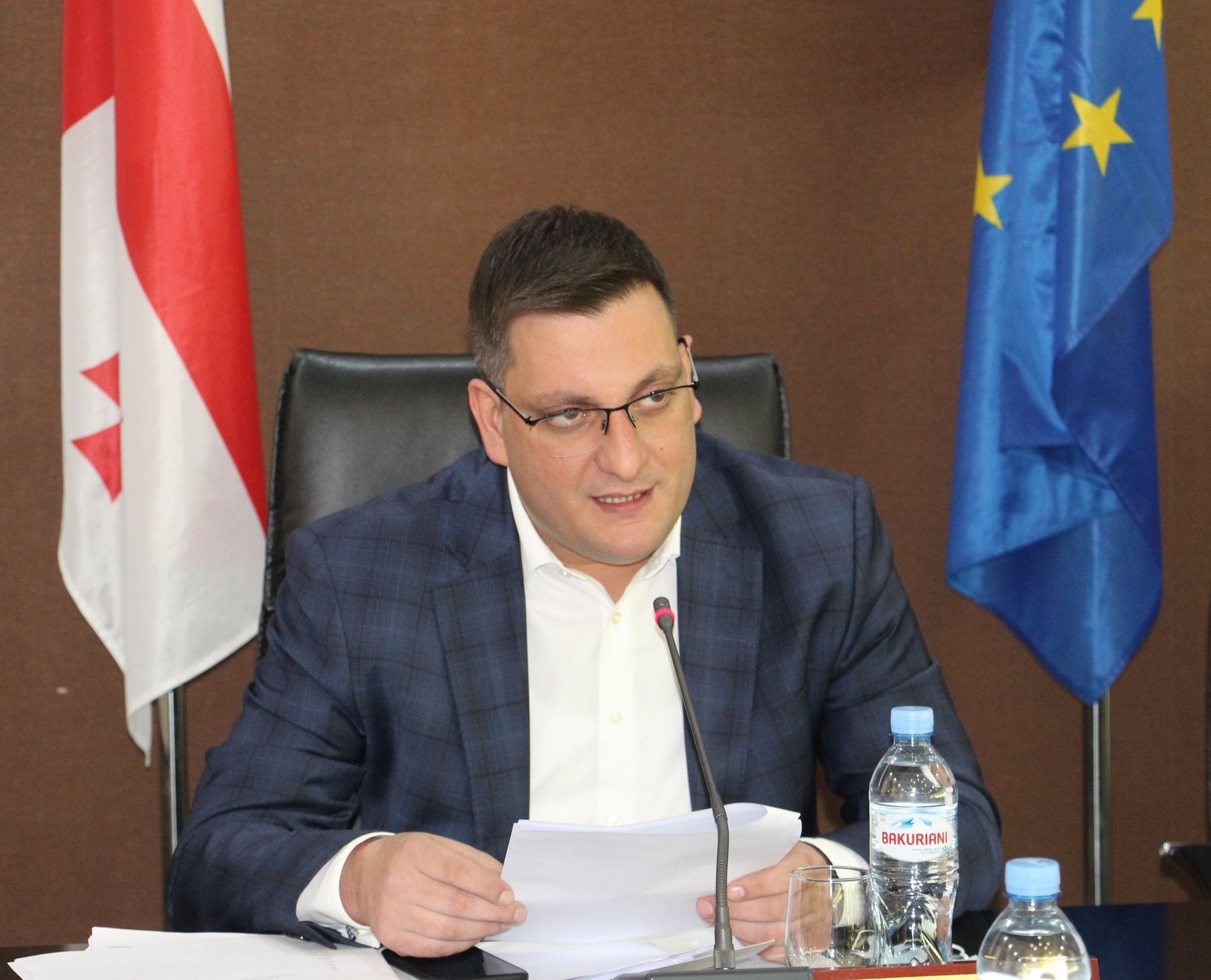
Therefore, we present an interview with Irakli Shengelia, Chairman of Kutaisi Municipality Council and Gender Equality Council.
Mr. Irakli, when was Kutaisi Municipality’s Gender Council established, who are its members, and what is the history of the council’s creation?
The Kutaisi Municipality Gender Equality Council was established to ensure systematic work on gender equality issues and coordinated work with the Gender Equality Council of the Parliament of Georgia.
Kutaisi Municipality’s Gender Equality Council was established in 2018. It is a new institutional body and an important lever for local self-government to decentralize gender policy and serve as an effective body at the local level. Accordingly, participating in the council’s formation carried great responsibility, both in terms of content and social aspects, as well as in political terms. Our goal was to get off to the right start, which I think we managed to achieve.
We began by studying existing institutional experience at the municipal level, and this experience formed the basis for subsequent steps following the council’s formation.
The council was joined by organizations and experts who have been working on women’s rights issues for years. The council brings together representatives from non-governmental organizations, media, healthcare sector, and of course, decision-making bodies.
What are the priorities of the Gender Equality Council and in what direction does it carry out its activities?
We set creating an effective statute as our main goal. In the first phase, using the council’s existing resources and experience, we raised awareness among members, including decision-makers. Institutional strengthening allowed us to plan an active information campaign. The council has hosted numerous events in this direction. Notably, Kutaisi Municipality received a letter of appreciation from the Prime Minister’s Advisor on Gender Issues for conducting an information campaign through the Gender Council during the Week for Eliminating Violence Against Women and Girls.
Under the council’s aegis, a conference “Women’s Voice” was held, where successful women from various fields shared their experiences with the audience and discussed the challenges they overcame on their path to professional success.
Today, the council’s activities cover several directions: we are working on the municipal gender strategy document, as well as on youth activation, promoting gender-sensitive budget formation, protecting women’s and girls’ rights, and developing inclusive social and healthcare programs. To precisely understand local needs and priorities, the council conducted research, and all activities implemented by the council are planned based on this information and consultations with partner organizations.
You mentioned the strategy document. Could you tell us more about what purpose this document serves and how effective it will be?
The municipal gender strategy document is a guiding document for the council and municipal organizations that defines local self-government gender policy, both in terms of gender budgeting and assessing gender aspects of municipal programs. The National Association of Local Authorities (NALAG) supports us in developing this document, facilitating coordinated work among municipalities and helping establish a unified vision between local self-government bodies and national authorities.
I should also add that Kutaisi Municipality is among the first to join the European Charter “On Equality between Women and Men in Local Life” through NALAG’s initiative and support. This allows us to make the municipality’s activities maximally inclusive and gender-sensitive, based on international and local experience, considering citizens’ needs and interests.
What is the municipality’s current gender policy, and what programs are implemented for women’s empowerment?
In developing programs, local self-government pays great attention to empowering women and girls. We have numerous programs directly aimed at women’s economic empowerment. First, I would highlight the economic empowerment program for mothers with multiple children. Previous experience only included one-time material assistance, but after studying the program’s effectiveness, to achieve long-term sustainable results, we decided to support professional retraining and business initiatives. As a result, participating families with multiple children now have a permanent source of income.
Among the programs developed on the council’s recommendation, I would highlight the construction of a social laundry facility at the House of Gratitude. After the project’s completion, beneficiaries of the House of Gratitude will have access to this additional service.
Our priority is also supporting women and girls with disabilities, primarily meaning increasing access to healthcare and social services. For this purpose, for the 2021 budget, on my personal initiative, a project was prepared to adapt the municipal polyclinic’s gynecological office. We are actively working on adapting bus stops and waiting areas. As you know, the city has new municipal transport that is fully adapted, though there is still much work to be done regarding the city’s infrastructure.
During the pandemic, local self-government made budget changes, reducing administrative costs and creating a new program focused on overcoming pandemic effects. Additionally, we are working on funding specific directions, for example, a program providing internet access to socially vulnerable families during distance learning to ensure all students have equal educational opportunities.
In 2021, we are conducting an effectiveness study of municipal programs, and notably, the assessment includes gender aspects. Through targeted, results-oriented steps and joint efforts, gender issues will become more prominent.
Finally, I must ask about Kutaisi’s feminist heritage. Is Kutaisi a distinctive city in this regard?
Kutaisi’s feminist past is both a source of pride and great responsibility for us. The history created by activist women reminds us where we come from. Our vision of innovation should be based on past experience, and it’s important that these stories, which the Soviet government tried to erase, are revived and passed on to future generations. For this purpose, a memorial to women deputies of the Supreme Council was opened at the Third School, which was formerly a women’s gymnasium, and a square in Kutaisi was named after Varinka Machavariani.
Beyond direct gender aspects, the council developed a recommendation regarding the dismantling of the Kikvidze monument as a symbol of Soviet occupation. The council is collaborating with the naming commission in this direction.