

Numerous measures are being taken to overcome the post-pandemic crisis, with a particular focus on regions where the impact of COVID-19 was most pronounced.
The Deutsche Gesellschaft für Internationale Zusammenarbeit (GIZ) actively engaged in this process by initiating a grant competition in Oni and Senaki municipalities, aimed at women’s economic empowerment, providing local women with opportunities to start or expand their businesses.
This competition, implemented by GIZ in collaboration with partner organizations – the National Association of Local Authorities of Georgia (NALAG) and the Georgian Association of Local Self-Government Unit Financiers (GFA), involved developing a business idea and acquiring production inventory worth 2000 euros as a grant for its implementation.
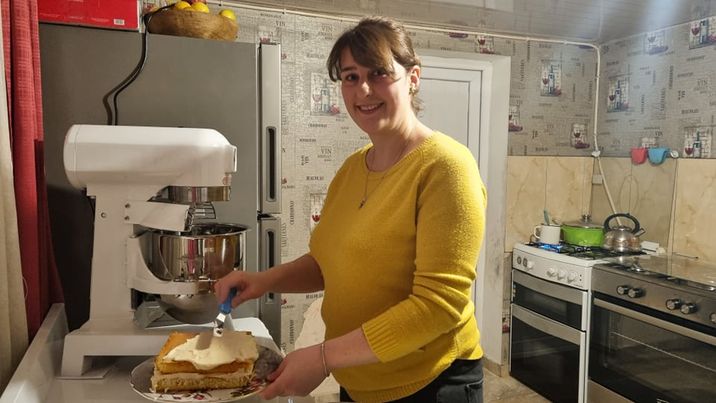 When everything, including educational institutions, closed due to the pandemic, Mariam Rekhviashvili began baking cakes and pastries at home.
Upon learning about the GIZ competition, she decided to combine work and family care, increasing her income through her favorite activity.
“It’s difficult to leave three young children, so I always thought about starting a business that I could do at home with my children while also becoming financially stronger. I’m a self-taught confectioner, which is why I didn’t dare to participate in other projects. However, this program, which focused on supporting beginner entrepreneurs, gave me the stimulus, and with the project funding, I now have equipment that I couldn’t have afforded with my own financial resources.
Due to the pandemic, I will fully comply with regulations and deliver packaged products to stores. In the future, I plan to take special courses and will definitely work on developing the business,” said Mariam Rekhviashvili, a resident of Oni, who received a gas stove, refrigerator, confectionery mixer, baking molds, and other necessary items as a grant.
Shorena Bidzishvili, who previously only sewed curtains for her own home, also came up with a business idea due to the lack of transportation during the pandemic. 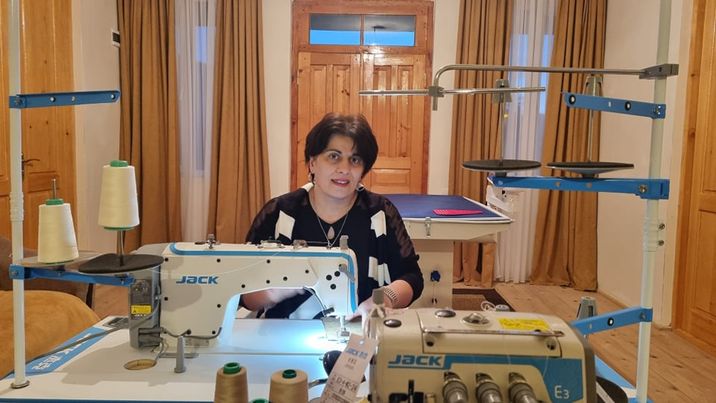 After winning the project and acquiring equipment, she is now ready to offer her textiles to family guesthouses.
It’s noteworthy that the beginner entrepreneur received a sewing machine along with a vacuum ironing board, work tables, and a steam iron as part of the program funding.
“Despite COVID-19, Oni still receives tourists, so family guesthouses are busy.
Since it’s still difficult to transport products post-pandemic, I decided to create textiles myself and supply local guesthouses with linen sets, bedspreads, and curtains,” said Shorena Bidzishvili, a resident of Oni.
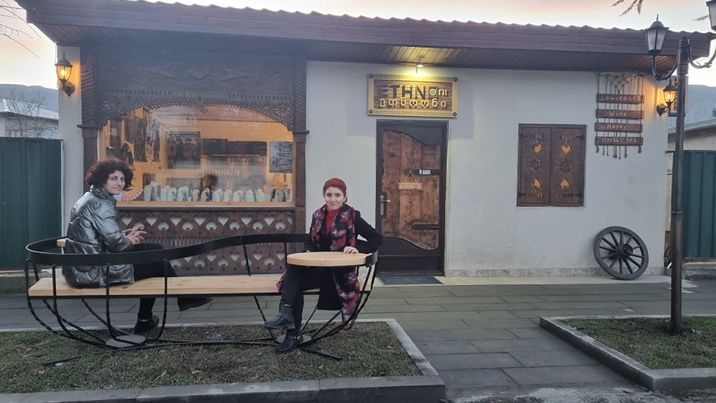
Ana Zardanashvili, an employee of the social enterprise “Edena” in Oni, took care of better presenting her activities and creating a comfortable environment for customers. She made one of the most popular tourist locations – the social ethno-shop and its yard – even more attractive and, most importantly, safe.
 “The flow of local vacationers and tourists to our shop never stopped. Consequently, there was a demand from customers to set up tables where guests could drink coffee.
The demand and desire to add this function to the store was so great that I decided to try my luck in the GIZ competition. Fortunately, my business idea was well-received, and through the grant, we acquired hot and cold coffee machines, as well as a sand coffee maker, along with a counter-table, small refrigerator, and outdoor table and chairs.
It’s worth noting that the design of the yard chairs complies with pandemic regulations in terms of maintaining distance, which will allow us to host guests more confidently,” said Ana Zardanashvili.
The workshop “Edena,” which focuses on preserving traditional crafts and passing skills to future generations, employs up to 15 people, including 2 persons with disabilities.
The Rachian souvenir workshop also helps local entrepreneurs sell their products.
Venera Khakhubia-Esebua, who has been working with felt for years and creates paintings and various accessories with students, is planning to open a multi-profile enterprise and employ children.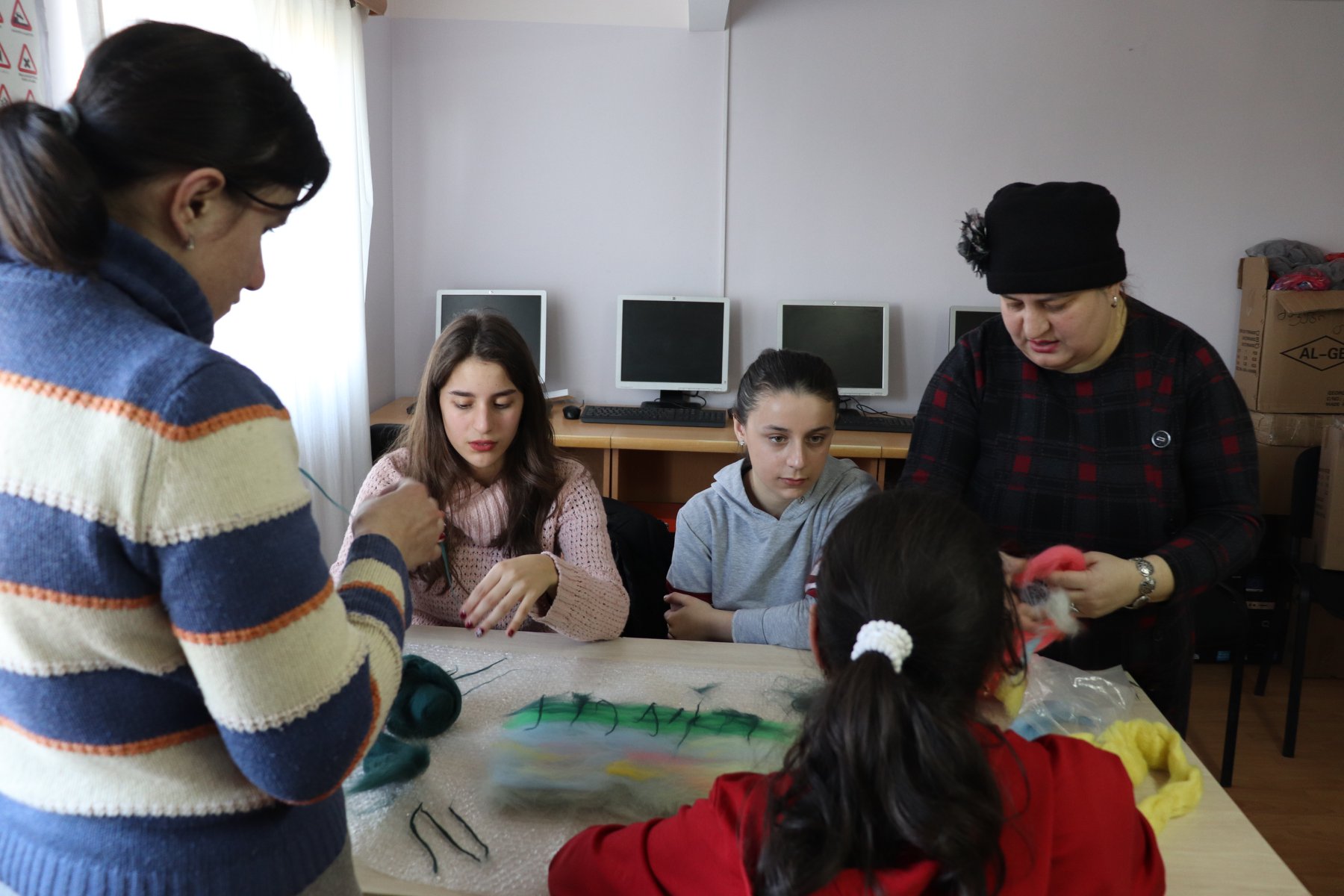
A resident of Old Senaki, before the pandemic, used to organize exhibitions at one of the important tourist locations, near the historic eight-century-old plane tree. However, the crisis caused by COVID-19 affected her activities, and now she is only engaged in private orders, which are mainly in demand during holidays.
“Trends are changing, and I want to diversify my products even more, but felt will remain a priority. I currently have 18 students. I’m trying to teach children handicrafts, which I believe will positively impact their economic situation in the future. I hope my students will inspire their peers, and their numbers will grow even more,” said Venera Khakhubia-Esebua.
According to her, the equipment acquired through the GIZ program – a washing machine, work and ironing tables, dryer, laptop, color inkjet printer, and other special tools – will help the artist in effective felt processing and creating more refined and quality products. This will contribute to the future development of the business.
The grant competition, which aims to promote gender balance through institutionalization in municipalities, was implemented with the support of the Deutsche Gesellschaft für Internationale Zusammenarbeit (GIZ) and commissioned by the German Federal Ministry for Economic Cooperation and Development (BMZ), within the framework of the program “Good Governance for Local Development in the South Caucasus” (GGLD).
This article was prepared with the support of the Deutsche Gesellschaft für Internationale Zusammenarbeit (GIZ) and commissioned by the German Federal Ministry for Economic Cooperation and Development (BMZ), within the framework of the program “Good Governance for Local Development in the South Caucasus” (GGLD). GIZ does not take responsibility for the accuracy of the content of the article and the opinions expressed in it.

