

Since 1991, a 16-day campaign against violence has been held worldwide, starting on November 25 – International Day for the Elimination of Violence against Women and ending on December 10 – International Human Rights Day.
Georgia is also actively involved in this campaign. Legislation has been refined, additional legislative guarantees have been created for victims of violence, and institutional mechanisms have been strengthened. Despite this, the problem remains relevant, which is further complicated by the circumstances caused by the pandemic.
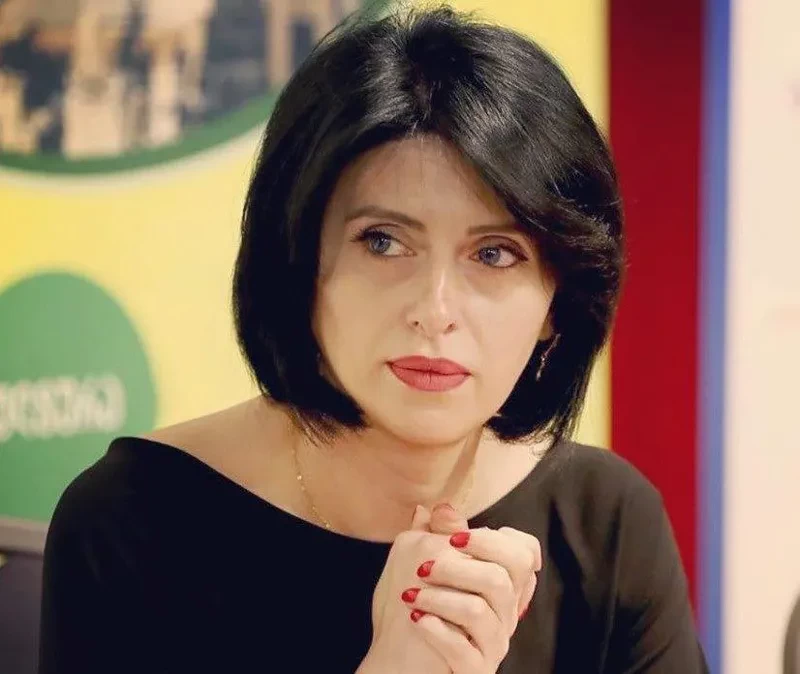
We were interested in what is being done in this direction in individual municipalities and on this topic we offer you an interview with Natia Ghvinashvili, Deputy Executive Director of the National Association of Local Authorities of Georgia (NALAG), as well as the coordinator of the project “Localization of Gender Policy”.
– Ms. Natia, your organization has been uniting all local self-government units in Georgia since 2004 and protecting their interests at the national and international levels, as well as promoting the development of local democracy and improving the qualifications of local government officials. What does the association do in terms of gender equality?
– The National Association of Local Authorities of Georgia successfully cooperates with many international organizations and numerous European associations of local self-government. For 16 years, NALAG has been promoting the development of local democracy and implementing various projects and activities throughout the country in accordance with the mandate given by member municipalities. According to this cooperation, it is very important for us, as well as for the whole country, to fulfill the international obligations undertaken by Georgia.
For this purpose, on the initiative of Kakha Kaladze, President of the National Association of Local Authorities of Georgia, a Gender Equality Platform was created in NALAG, aimed at further strengthening coordination between municipalities and implementing activities that promote gender equality at the local level. He also voiced an initiative according to which the association, as an umbrella organization uniting self-governing units, took responsibility
for advocating gender equality issues in municipalities. Since 2010, the association has been a member of the Council of European Municipalities and Regions (CEMR), which is the oldest and largest European association of regional and local governments, uniting local government associations from 41 European countries. From Georgia, it is NALAG that represents our country in this organization and accordingly, we have very close cooperation with CEMR. On the recommendation of CEMR and with the mediation of the National Association of Local Authorities of Georgia, 4 Georgian municipalities recently signed the European Charter for Equality of Women and Men in Local Life, thereby confirming their readiness and support for the principles of gender equality in their municipality. The document, created by the Council of European Municipalities and Regions in May 2006, aims to establish gender balance at the local level and implement measures to improve equality between women and men within their jurisdiction, and is signed by numerous municipalities in European countries.
We first introduced the Charter to Georgian society a few years ago when adapting it to the Georgian language, with the financial support of the Norwegian Ministry of Foreign Affairs, and we trained nearly 400 local government representatives on Charter issues. The document itself was distributed to all municipalities without exception. However, we did not end the advocacy process there and the document will be printed again within the framework of the project “Localization of Gender Policy”, after which it will be sent to all municipalities again. We are also working to increase the number of municipalities from Georgia signing the Charter and for other self-governments to take this very important step.
On the initiative of the organization, numerous seminars and conferences were held, which served to introduce mechanisms to eliminate gender inequality and strengthen this direction. Among them, I would highlight the two-day large-scale coordination seminar of the Eastern Partnership – “Strengthening Gender Equality Dialogue and Local Self-Government Reform in Georgia – Achievements, Challenges and Opportunities”, which was held in February of this year in Tbilisi, organized by NALAG and with the support of the European Platform for Local and Regional Government Development and the Network of Local Government Associations of Southeast Europe. At the event, which was attended by representatives of local authorities of Georgia, as well as Eastern Partnership countries, in particular Ukraine and Moldova, non-governmental organizations and experts in the field, representatives of municipalities that signed the Charter made short presentations and talked about the prospects of joining the European Charter and future activities to be implemented. At the end of the session, the seminar participants moved to a working format and discussed plans and guidelines to be implemented within the framework of the Equality Charter.
It is noteworthy that the seminar allowed representatives of the European Union and the Eastern Partnership to share experiences with each other and prepare proposals for the attention of European institutions, the ultimate goal of which is to support and strengthen local self-governments. Here I will also mention that the aforementioned Council of European Municipalities and Regions (CEMR) serves as the secretariat of the European platform of local and regional authorities. I cannot fail to highlight the “Women Entrepreneurs Business Forum” held in Ozurgeti Municipality, which was implemented with our support and where successful women shared their experience with women involved in small and medium businesses and interested in folk crafts. Through this format, they also heard information about funding and other opportunities from representatives of organizations such as “Produce in Georgia”,
“Europe Foundation”, “Chamber of Commerce”, “Global Benefit Georgia”, Georgian Farmers Association and others. This forum gave aspiring entrepreneurs the opportunity to establish business relationships with various companies and representatives of the banking sector, who offered them preferential loan terms. What is no less important for women living in the region, in order to provide constantly updated information on business financing, regulations and news, a unified network was created, which further simplifies their involvement in business. This network has worked and developed so well that within the framework of the project “Localization of Gender Policy” we are thinking of covering other municipalities as well.
– You are leading the project “Localization of Gender Policy”, which is ongoing with the support of UN Women and the Norwegian government. What principles and strategic approaches does this project include?
– First of all, I must note that it is a priority for us to work with an organization such as UN Women. It was with their help that we started this project, which aims to strengthen gender equality and gender mainstreaming mechanisms in self-governments, as well as to develop effective policies on these issues and implement them at the local level. The project includes three main components, namely strengthening NALAG’s gender equality platform and creating the organization’s gender equality strategy, developing guideline manuals for gender equality action plans for Georgian municipalities, as well as advocating for their accession to the “European Charter for Equality of Women and Men in Local Life”.
We have already implemented the first component, we have developed the association’s gender equality strategy for 2021-2025 and the action plan for 2021-2023, which has already been approved by NALAG’s executive board. And the implementation of the other two components is ongoing according to the project deadlines and framework, and soon, after completion, we will present it to a wide audience. I would like to emphasize that in addition to the necessary resources to achieve our goals, we have a great desire and motivation, which I think is well reflected in our activities.
– Does the pandemic and imposed restrictions hinder you in implementing the project?
– The project “Localization of Gender Equality Policy”, which covers all 64 municipalities of Georgia and is ongoing within the framework of the initiative “Good Governance for Gender Equality in Georgia” supported by the Norwegian Ministry of Foreign Affairs, started in the summer of this year. Accordingly, we managed to hold several important events before the second wave of the pandemic. In order to share detailed information about the principles of the European Charter on Equality of Women and Men in Local Life, we held meetings in the regions of Western and Eastern Georgia, where we also discussed the challenges in this direction, along with the activities carried out by the municipal gender equality councils and future plans. As I have already mentioned, 4 Georgian municipalities have already joined the European Charter.
Of these four municipalities, two are self-governing cities – Kutaisi and Rustavi, and two are community municipalities – Lagodekhi and Ozurgeti. It is their involvement that is critically important in the process of advocating for the Charter, which I think can be somewhat motivating for other municipalities. From this cycle of meetings, we only had to meet online with several municipalities in Eastern Georgia, but it should be said that these meetings were no less productive. Most importantly, our activities were not limited to this and we continue to work very actively today. Many events have moved online and many activities have been carried out remotely. However, I am sure that these difficulties will not affect the final result.
– The 16-day campaign against gender-based violence also coincided with the second wave of the pandemic and restrictions. In what form are you involved in ongoing events?
– You will agree that 2020 was really a difficult and exceptionally busy year. However, as I have already mentioned, despite the pandemic, we were still able to continue our activities and successfully fulfill the obligations we took not only to our partners, but also to our member municipalities. For this, first of all, I would like to thank each of my colleagues and employees who tirelessly tried to fulfill their assigned duties with utmost precision. Also, I cannot fail to express gratitude to our partners from UN Women, without whose support, I think, it would have been difficult for us to conduct the planned activities so effectively in this situation.
In general, this problem has put us in front of a new reality and taught us many things that we have not thought about until now. Accordingly, we got involved in this campaign with a very busy schedule. We once again affirmed our unwavering position that NALAG steadfastly and firmly supports the mechanisms of state policy existing in the direction of ensuring gender equality in all spheres of society and eliminating violence against women.
And since it was extremely important for us to have maximum involvement of all municipalities of Georgia during the campaign, we called on member municipalities to implement such activities that would respond to the challenges in the field of combating violence against women and at the same time would be possible against the background of the situation caused by the pandemic and imposed restrictions. To achieve the above goal, with the support of our partners and in cooperation with the Administration of the Government of Georgia and the Ministry of Regional Development and Infrastructure of Georgia, we developed a supporting instruction, which municipalities are successfully following. Within the framework of the campaign, we prepared posters, face masks and logo-bearing pins for all 64 municipalities of the country.
In the coming days, an informational video clip, brochures, as well as the European Charter on Equality of Women and Men in Local Life will be distributed on the same topic and sent to member municipalities. Information posters, which contain necessary information about state services existing in Georgia for the purpose of supporting victims and preventing violence, will be placed not only in the administrative buildings of municipalities, but also in crowded places, which will further contribute to raising public awareness. It is symbolic that at the beginning of the 16-day campaign against gender-based violence, within the framework of the project “Localization of Gender Policy”, NALAG created a media network aimed at close cooperation with gender equality councils, developing unified mechanisms to overcome challenges, as well as sharing good examples and practices implemented by municipalities and providing media support.
The working group, which is staffed by employees of public relations and media services of all municipalities, is already actively working within the framework of this campaign. Various thematic events are being held in municipalities with the involvement of NALAG’s media network. Due to the pandemic and restrictions, many events have moved online, but it should be noted that municipalities are actively holding violence prevention and informational meetings in this format. It is noteworthy that NALAG’s media network, as a kind of tool, will continue to function after the completion of the project and will contribute to the planning and implementation of gender equality support activities in member municipalities.
– In this short time, your desires and motivation have indeed become clearly visible. What can you tell us about future plans?
– As I have already mentioned, the Executive Board has already approved the Association’s Gender Strategy for 2021-2025. Of course, the strategy document is relatively general, but it is accompanied by a very specific action plan, which we plan to present to a wide audience in the near future. It is precisely these documents that outline the goals and objectives that NALAG will implement in the coming years. However, I would also like to note that we are also thinking about and working on even more large-scale events. What I can say definitively about our plans today is that our task is to plan and implement such projects in the coming years that, along with sharing European experience of gender mainstreaming in Georgian municipalities, will contribute to the establishment and support of local democracy principles and goals.